How Local Initiatives Encourage Drivers to Stop Texting

Texting while driving is one of the most preventable road safety risks in the United States. Yet it continues to happen every single day at traffic lights, on highways, in school zones, and even in residential neighborhoods.
The real shift in behavior is not happening only because of federal laws. It is happening because communities are stepping in. When you understand how local initiatives encourage drivers to stop texting, you begin to see how schools, police departments, city councils, businesses, and families work together to create safer roads.
Local action changes habits faster than national messaging alone. And that is where real impact begins.
What Does “Local Initiatives” Mean in Road Safety?
Local initiatives are community-based programs designed to reduce distracted driving within specific cities, counties, or neighborhoods.
These efforts may include:
- City-led awareness campaigns
- School education programs
- Local law enforcement crackdowns
- Employer driving policies
- Community pledge movements
- Faith-based or nonprofit outreach
Unlike broad national campaigns, these programs are tailored to local traffic patterns, demographics, and community culture.
That personalization makes a powerful difference.
Why Texting While Driving Remains a Behavioral Problem
Most drivers already know texting while driving is dangerous. The challenge is not awareness alone. The real issue is habit and overconfidence.
Drivers often believe:
- “I’ll just check it quickly.”
- “It’s only a short reply.”
- “Traffic is slow anyway.”
Those small decisions create major risks.
Changing behavior requires more than statistics. It requires social pressure, accountability, and visible reminders in daily life. That is exactly how local initiatives encourage drivers to stop texting by making safety part of community culture.
The Psychology Behind Community-Based Change
People are more likely to change their behavior when:
- They see peers following new norms
- Their community openly supports the message
- There are visible consequences
- The message feels personal
A national advertisement may be easy to ignore. A local billboard featuring a nearby crash story is harder to forget.
When safety becomes a shared responsibility, texting behind the wheel starts to feel socially unacceptable rather than casually tolerated.
1. School and Youth Engagement Programs
TLocal schools help reduce texting while driving through:
- Student-led awareness assemblies
- Safe driving pledge campaigns
- Mock crash simulations
- Peer ambassador programs
Peer influence plays a major role. Teens are more likely to listen when the message comes from fellow students.
Parents support these efforts through:
- Family driving agreements
- School information sessions
- Safe-driving workshops
This combined school-and-home approach strengthens responsible driving habits.
2. Community Pledge Movements
Many cities encourage residents to publicly commit to distraction-free driving.
These initiatives include:
- Signing online pledges
- Displaying car decals
- Sharing social media commitments
- Participating in community safety days
Public commitments increase accountability. When someone makes a promise in front of neighbors, coworkers, or friends, they are more likely to keep it.
This social reinforcement explains part of how local initiatives encourage drivers to stop texting without relying solely on fines.
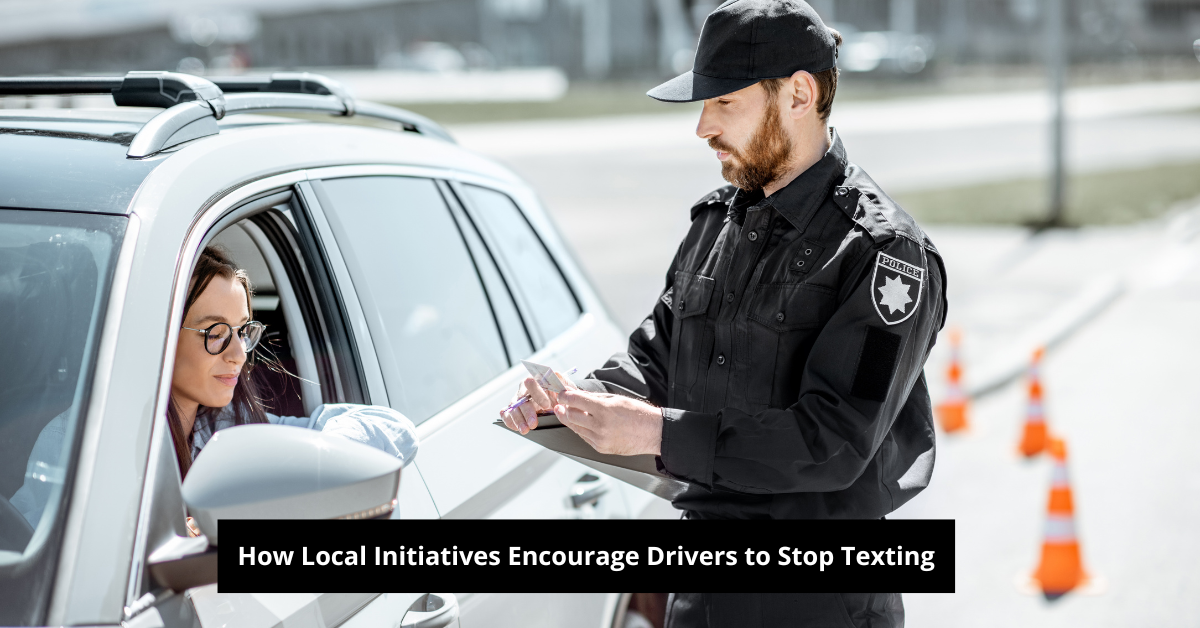
3. Local Law Enforcement Visibility
While laws against texting and driving exist in most states, enforcement visibility varies by region.
Local police departments often run focused campaigns that include:
- Targeted patrols in high-risk zones
- Increased monitoring near schools
- Public announcements before enforcement periods
- Community briefings about traffic safety
When drivers see active enforcement in familiar areas, compliance improves.
It creates a direct connection between risky behavior and real consequences.
4. Partnerships With Local Businesses
Employers are becoming major players in road safety.
Companies with delivery drivers, sales teams, or service vehicles are implementing:
- Zero-tolerance phone-use policies
- Mandatory safe-driving training
- Incentive programs for clean driving records
- Fleet monitoring systems
Some local businesses even sponsor community awareness events or distribute educational materials.
When workplace policies reinforce safe habits, the message carries beyond the office.
5. Local Media and Storytelling
Community news outlets often highlight local crash stories, interviews, and safety campaigns.
This type of coverage:
- Personalizes the issue
- Connects it to real families
- Keeps the conversation active
- Reinforces social norms
Local storytelling shapes perception.
Drivers respond more strongly to stories that happen “near home” rather than distant statistics.
Practical Strategies Drivers Can Adopt Today
While local initiatives provide support, personal responsibility remains essential.
Here are proven steps drivers can take:
- Turn on “Do Not Disturb While Driving” mode
- Keep the phone out of reach
- Set navigation before moving
- Inform contacts that you do not reply while driving
- Pull over safely for urgent communication
Guidance for Parents and Guardians
Parents influence teen behavior more than any campaign.
To reinforce community efforts:
- Model distraction-free driving
- Create clear family rules about phone use
- Discuss real-world consequences calmly
- Praise responsible driving behavior
- Stay involved in school safety programs
Why Community-Based Solutions Create Lasting Impact
Understanding how local initiatives encourage drivers to stop texting reveals an important truth: behavior changes faster when it is reinforced from multiple angles.
Local initiatives succeed because they:
- Combine education and accountability
- Involve families and schools
- Use visible enforcement
- Encourage public commitment
- Make safety part of community identity
Cultural change does not happen overnight. It grows through consistent, visible effort.
Conclusion
Texting behind the wheel is not just a personal choice. It affects everyone on the road.
Learning how local initiatives encourage drivers to stop texting shows that change begins at the community level. Schools, families, businesses, law enforcement, and local leaders all play a role in shifting driving culture.
When communities speak with one voice, risky habits lose acceptance.
Put the phone down. Stay focused. Protect lives including your own.
FAQS
Local initiatives reduce texting while driving by combining education, enforcement, public pledges, and community involvement. These efforts create social accountability and reinforce safe habits.
Community programs often feel more personal and immediate. Drivers respond more strongly when safety messages directly impact their own neighborhoods.
Drivers can participate in pledge campaigns, attend safety events, follow distraction-free habits, and encourage friends and family to do the same.
Schools educate young drivers through peer-led programs, assemblies, and family engagement initiatives that promote responsible driving behavior.