
Why You Should Never Text While Driving: Stay Safe on the Road

Introduction
Texting duuring driving means you are using your phone to send, read, or reply to messages during driving. Even when traffic appears
light or you’re stopped at a light, this habit is to much dangerous.
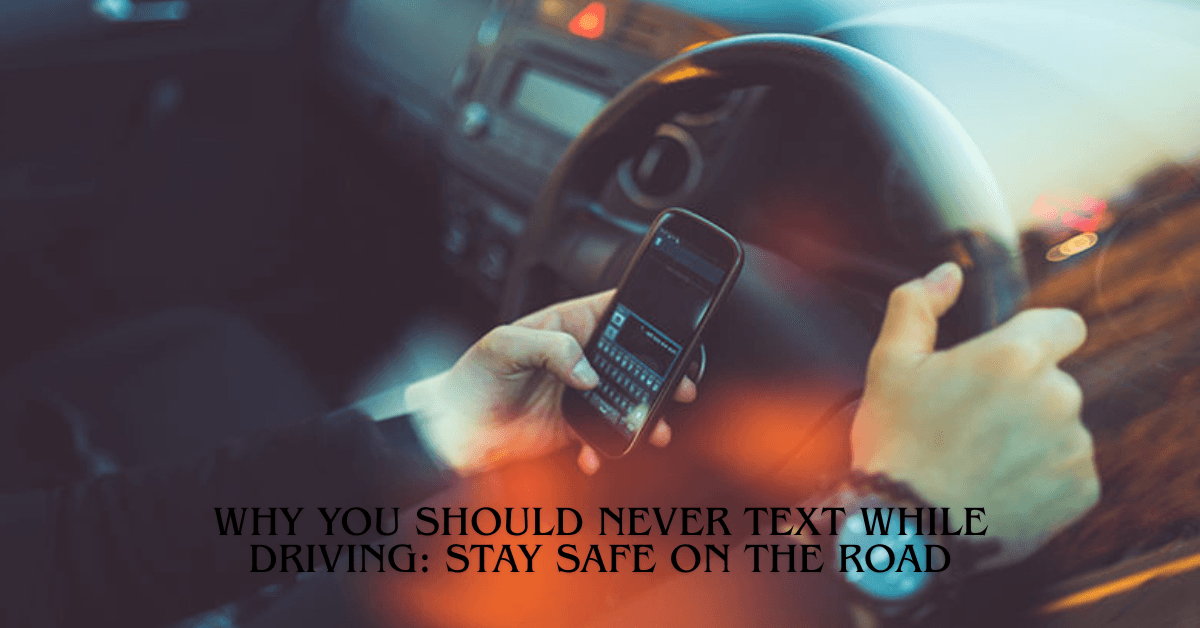
Looking at your phone takes your eyes off the road, your hands off the wheel, and your mind away from driving. That short moment of distraction can cause crashes, injuries, or even fatalities.
Texting while driving is one of the main reasons for accidents in the United States. With phones now at the center of how we communicate, get directions, and stay entertained, it’s more important than ever to resist the temptation to check messages while behind the wheel.
Why Texting While Driving Is So Dangerous
Texting while driving involves three types of distraction:
- Visual: Eyes are off the road
- Manual: Hands leave the steering wheel
- Cognitive: Mind focuses on the phone instead of traffic
When all three occur together, your crash risk rises dramatically.
Research from the Virginia Tech Transportation Institute shows that texting for just five seconds is equivalent to driving the length of a football field without looking. During that time, anything can happen a car may stop suddenly, a child could run into the street, or traffic may change unexpectedly.
How Common Is Texting While Driving?
Texting while driving is very common in the U.S., especially among young drivers.
- According to the National Highway Traffic Safety Administration (NHTSA), over 3,000 deaths in 2023 involved distracted drivers.
- Drivers aged 16 to 24 are most likely to text while driving.
- Adults, parents, and professionals also text while driving, often believing they can multitask or that messages are urgent.
Consequences of Texting While Driving
1. Higher Risk of Crashes
- Distracted drivers react more slowly and make more mistakes.
- Even a minor delay can turn a near miss into a serious crash.
- High-speed crashes often lead to severe injuries or fatalities.
2. Legal Penalties
Texting while driving is illegal in most states. Penalties may include:
- Fines: $50 to over $500
- Points on your driving record
- License suspension
- Higher insurance rates
- Criminal charges if someone is injured or killed
Some states allow primary enforcement, where officers can pull you over just for texting, while others use secondary enforcement.
3. Emotional Impact
- Crashes caused by texting can lead to guilt, anxiety, or trauma.
- Families affected by distracted driving experience lasting grief and pain.
Why People Still Text While Driving
Despite the risks, people continue to text while driving because of:
- Habit and Phone Addiction
- App notifications and alerts create a constant urge to check your phone.
- Perceived Urgency
- Many believe messages must be answered immediately.
- Overconfidence
- Some drivers think they can safely multitask.
Who Is Most Likely to Text While Driving?
- Teens and young adults (16–24): Highest risk group
- New drivers: Lack experience and overestimate their skills
- Busy professionals: Feel pressure to stay connected
- Parents: Often try to manage schedules while driving
Anyone can fall into this habit, which is why awareness and self-discipline are critical.
Are Texting Laws Effective?
Texting laws exist, but enforcement is challenging:
- Hard to detect: Quick glances at phones are often hidden from police.
- Drivers underestimate the risk: Many believe a “quick text” is harmless.
- Pressure to respond: Work and social obligations create temptations.
Laws alone are not enough; driver education and personal responsibility are essential.
How Technology Can Help
Modern technology can reduce distractions:
- Do Not Disturb While Driving: Blocks notifications and auto-replies to texts.
- Driving Apps: Apps like LifeSaver or SafeDrive reward distraction-free driving.
- Bluetooth and Voice Controls: Enable hands-free calls and messages.
Some insurance providers offer discounts for drivers who use these safety tools.
The Role of Driving Schools
Defensive driving courses help drivers:
- Understand the risks of texting and driving
- Learn strategies to avoid distractions
- Build safe driving habits for life
Courses are useful for teens, adults, and parents who want to model safe driving.
Conclusion
Texting while driving is dangerous, illegal, and unnecessary. The risk to yourself, passengers, and others is far too high. By avoiding distractions, using technology responsibly, and following safe driving practices, we can reduce accidents and save lives.
Focus on the road that message can wait.