
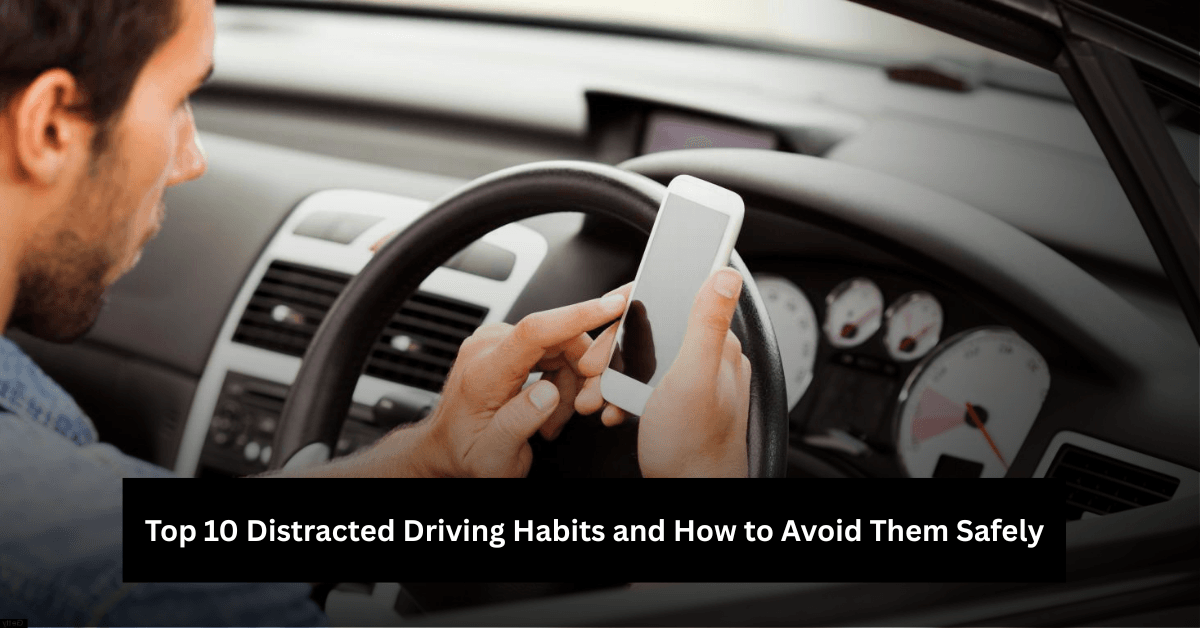
Top 10 Distracted Driving Habits and How to Avoid Them Safely

Driving should be a focused task yet countless drivers take unnecessary risks every day by engaging in distracting behaviors. From texting while driving to fiddling with vehicle controls, these actions significantly increase the chance of a crash. This blog explores the most common distracted driving habits, important statistics in the USA, real-world examples, and actionable road safety tips you can start using today.
Introduction
Distracted driving remains one of the most persistent dangers on U.S. roads. According to the National Highway Traffic Safety Administration (NHTSA), distracted driving claimed thousands of lives recently, with thousands more injured in related crashes. Texting while driving in particular is one of the most alarming forms of distraction as it combines visual, manual, and cognitive diversion from the road.
Understanding these behaviors and how to avoid them is essential for drivers of all ages especially teens, who are statistically more likely to engage in risky driving practices.
Distracted Driving Statistics & Data (USA)
Here are some key U.S. driving statistics that highlight the impact of distracted driving in recent years:
- 3,000+ fatalities annually: Each year, distracted driving contributes to over 3,000 deaths on U.S. roads, with thousands more injured.
- Texting increases crash risk by 23x: Drivers who text while driving are an estimated 23 times more likely to be involved in a crash than attentive drivers.
- 5 seconds of visual distraction: Reading or sending a text takes your eyes off the road for about 5 seconds enough to travel an entire football field at highway speeds.
- Teen driver risk: Distracted driving plays a role in around 58% of teen crashes, and many teens report using their phones while behind the wheel.
- Frequent phone use: Nearly half of adult drivers admit to sending or receiving texts while driving, even though most acknowledge it’s dangerous.
These numbers show that distracted driving is a major public safety problem that requires behavioral change not just awareness.
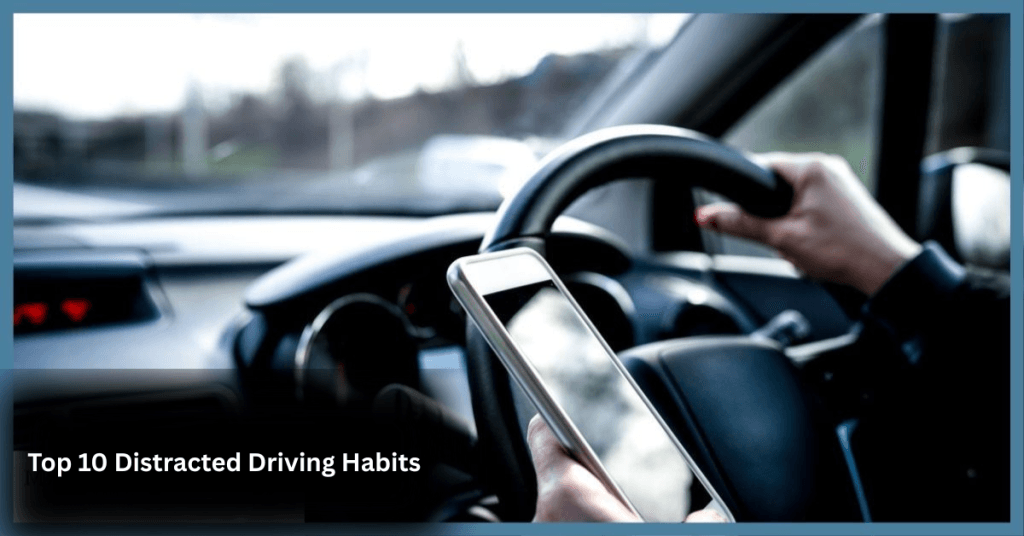
Top 10 Distracted Driving Habits
Below are the most common behaviors that take a driver’s attention away from the road and tips to avoid them.
1. Texting While Driving
Why It’s Dangerous: Texting involves visual (eyes off road), manual (hands off wheel), and cognitive (mind off driving) distraction simultaneously.
Avoidance Strategy:
- Turn on Do Not Disturb mode.
- Place the phone in the glovebox or out of reach.
2. Talking on the Phone (Handheld)
Why It’s Dangerous: Even hands-free conversations can distract the brain from driving.
Avoidance Strategy:
- Use voice assistants only when necessary.
- Pull over safely if you must make a call.
3. Adjusting GPS or Music
Fiddling with navigation or audio systems takes your eyes and attention from the road.
Avoidance Strategy:
- Set your route and playlist before driving.
4. Eating and Drinking
Handling food or drinks can be surprisingly distracting and increase crash risk.
Avoidance Strategy:
- Eat before or after the trip.
- Avoid open containers while driving.
5. Talking to Passengers
Intense conversations especially emotional ones can take your mind off driving.
Avoidance Strategy:
- Keep interactions light.
- Ask passengers to help monitor traffic.
6. Looking for Objects in the Vehicle
Reaching for dropped items causes visual and manual distraction.
Avoidance Strategy:
- Secure items properly before moving.
7. Applying Makeup or Grooming
These actions pull eyes and hands away from driving, often for extended periods.
Avoidance Strategy:
- Complete your grooming routine before departure.
8. Daydreaming or Losing Focus
A wandering mind is a real form of cognitive distraction.
Avoidance Strategy:
- Stay alert.
- If tired, take a break or switch drivers.
9. External Distractions (Billboards, Scenery)
Even something outside the vehicle can catch attention.
Avoidance Strategy:
- Keep eyes on the road and focus ahead.
10. In-Car Technology (VIN Systems)
Modern infotainment systems compete for driver attention.
Avoidance Strategy:
- Familiarize yourself with controls before driving.
Real-World Examples & Case Studies
Teen Driving Risk
Researchers found that teens often look at their phones for extended periods. In one study, young drivers spent over 20% of their driving time looking at their phones, with many glances exceeding two seconds a significant crash risk.
State-Level Awareness Campaigns
In Texas, the “Talk. Text. Crash.” initiative was launched to combat distracted driving, showing how public campaigns can raise awareness and save lives.
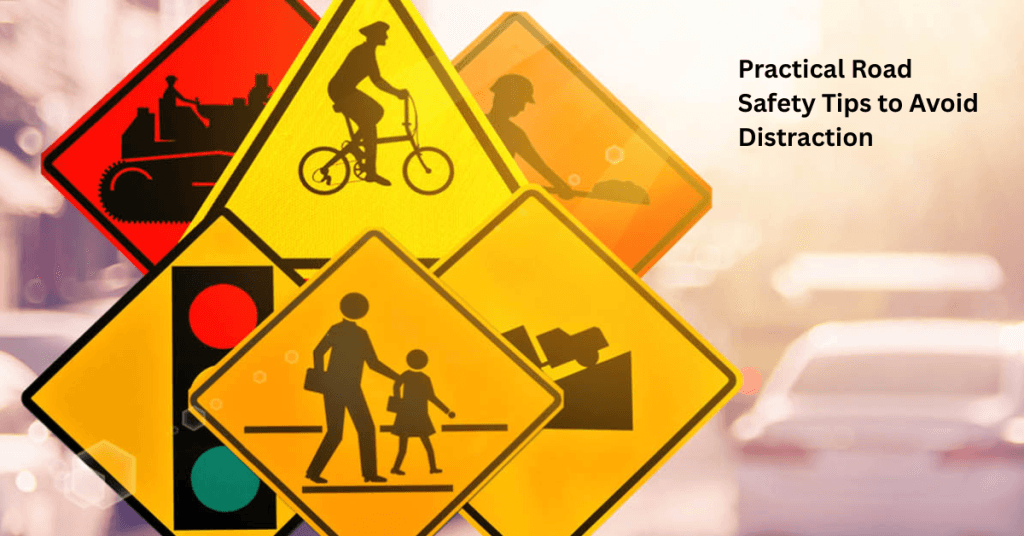
Practical Road Safety Tips to Avoid Distraction
Here are proven distracted driving solutions you can apply:
Create a No-Phone Zone
Put your phone out of reach before starting the engine.
Use Do Not Disturb While Driving
Most phones have this feature use it every time.
Plan Your Ride Before Driving
Set navigation and music early.
Limit Passengers (Especially Teens)
More passengers often equal more distraction.
Educate and Lead by Example
Parents should model safe driving for teen drivers.
Take Breaks on Long Trips
Fatigue adds to distraction rest when needed.
Avoid Multitasking
Stay focused: hands on wheel, eyes on the road.

Teen Driver Safety: Extra Precautions
Teens are especially prone to distraction due to inexperience and high tech usage. These safety tips are critical:
- Enforce a no-phone rule while driving.
- Delay driving with friends until more experienced.
- Discuss the real dangers of texting while driving.
Conclusion
Distracted driving especially texting while driving continues to be a major contributor to crashes and fatalities in the USA. But these accidents are preventable when drivers adopt safer habits, limit distractions, and prioritize road safety.
Start with simple steps today: silence your phone, prepare your route in advance, and never multitask behind the wheel. Every focused driver helps create safer roads for everyone.